The most informative, educational, no-B.S. blog about Denver Market Trends and Denver Real Estate, by the Denver House Guy himself. Period.
Tuesday, October 25, 2016
RiNo in 4 Years, According to Developer Rendering
The River North neighborhood has gone from industrial corridor to hipster magnet, full of bars, restaurants and apartment buildings. And this week, developers of the area released a rendering of what the neighborhood will look like in four years (see the image above), when at least fifteen projects currently in the works are complete or will be near completion.
Responsible for much of the redevelopment is OZ Architecture, whose projects are highlighted in yellow above. More about a few of its RiNo projects below. (Full disclosure: OZ redesigned Westword's office space.)
The WTC will be located along 38th Street between Walnut and Blake streets. According to its website, OZ "will develop the master plan for the extensive campus, to be anchored by a flagship hotel. The development will also include approximately 250,000 square feet of best-in-class office space for both large and small businesses from around the world, an international business and conference center, a flex-work environment, an array of multicultural restaurants, diverse retail, an art gallery and a parking structure."
tial condominiums, an incubator office space, and plenty of retail and restaurant locations on the ground floor." DriveTrain will be walking distance to the Light Rail A Line station at 38th and Blake. Groundbreaking will happen sometime next year. OZ will also redevelop the old Gold Star Sausage processing plant at 2800 Walnut Street, which 1425 Market LLC bought in 2015 for $3.2 million.
This awesome price change map shows you, by neighborhood:
The average sales price of homes that have sold in the last 12 months
Whether the neighborhood has gone up (green) or down (red) in the last 12 months compared with the previous 12 months.
How many sold in the last 12 months.
How many are for sale.
How many are under contract.
And the months of inventory, meaning how long it would take for al the homes for sale to be absorbed by the buyers. The lower this number is, the hotter that neighborhood is.
There are three Colorado cities where residents have it made — they have low crime rates, top-notch schools and low unemployment.
And those three communities are Highlands Ranch, Centennial and Broomfield which landed the Nos. 6, 13 and 25 spots, respectively, on Money Magazine's annual "Best Places to Live" report.
To compile its report, Money Magazine starts with all U.S. towns and cities with populations of between 50,000 to 300,000. It then analyzed cities based on a number of factors, including:
Predicted job growth.
Crime rates.
Ethnic diversity.
Home values.
Economic performance/tax rates.
Median household incomes.
Accessibility to health care, culture, strong public schools and sports.
Resident interviews (conducted by Money Magazine reporters).
Highlands Ranch — at No. 6 nationally — was noted for its exceptionally low crime rates, high-ranking schools and plentiful jobs. The fact that Charles Schwab located its Denver-area offices nearby, as well as the planned, $315 million hospital being built by UCHealth, were also mentioned in the report.
"Highlands Ranch is a bedroom community where residents sleep very well at night. In fact, they affectionately refer to their hometown, about 15 miles south of downtown Denver, as 'the bubble,' " Money Magazine said. "The bad news is that the sizzling job market has attracted an influx of new residents, who in turn have driven up real estate costs."
Highlands Ranch, with a population of 105,143, has a median home price of $410,000, property taxes of $2,466, an unemployment rate of 3.4 percent and an average commute time of 26 minutes.
"On the plus side: Highlands Ranch, a planned community, was founded in 1981, so the housing stock is relatively new," the report noted.
With a population of 107,569, Centennial — at No. 13 on the list — ranked especially high because of its job market. Money Magazine called out the numerous companies that reside there, including major Comcast operations, United Launch Alliance and Innovation Pavilion, the 80,000-square-foot startup incubator that provides co-working space for entrepreneurs.
"Centennial also makes it easy for residents to take advantage of Colorado’s 300 days of sunshine," Money's report said. "The town offers more than 2,500 acres of open space and parks, including award-winning Center Park, with an amphitheater and kid-friendly splash pad."
Centennial's median home price is $374,500 with property taxes of $2,368. It's average commute time is 24 minutes and its unemployment rate is 3.8 percent. The city was also the first city selected to get a TopGolf, a 65,000-square-foot golf-themed entertainment complex.
Money Magazine said Broomfield — at No. 25 nationally — was an "enviable location for both living and work" because of its proximity to the mountains and its more than 8,000 acres of open space and 281 miles of trail, as well as its rapidly growing job market.
"With such a strong job market, Broomfield is attracting new residents and building homes rapidly, causing some areas of town to look more like construction zones than neighborhoods," Money's report said. "Also, while many of Broomfield’s schools receive top marks, overcrowding has become a problem in some locations."
Companies headquartered at the city's 963-acre business park Interlocken Advanced Technology Environment include Level 3 Communications and Vail Resorts.
Broomfield, with 63,676 residents, has a median home price of $365,000, property taxes of $2,590, a 26-minute average commute time and an unemployment rate of 3.6 percent.
If you are thinking of moving to one of
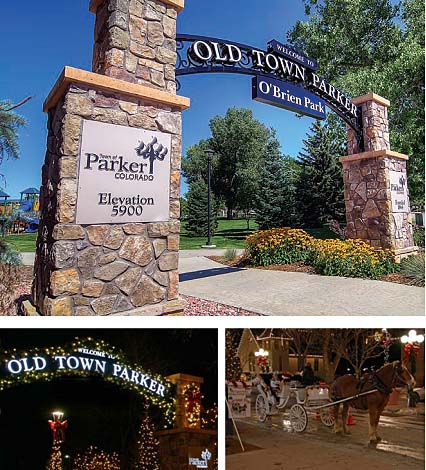
Denver’s suburbs, you should consider Parker, CO.With easy access to I-25 and E-470, Parker is
located to the Southeast of Denver-proper.There is a lot to do in Parker, to include concerts, camps, classes,
art exhibits, festivals, and recreational activities for kids and adults
alike!There are numerous recreational
facilities around town, to include pools, field houses, gyms, rock climbing
centers, facility centers, playing fields, equestrian trails and more.Further, Parker has a large network of
trails, to include the Cherry Creek Trail, Centennial Trail, Sulpher Gulch
Trail, Tallman Gulch Trail, the Newlin Gulch Trail, and the future East/West
Trail.
According to Trulia, Parker is exhibiting the
current market trends:
Housing Market Trends
Market trends help you understand the
movement of key price indicators. Trends in Parker show an 8% year-over-year
rise in median sales price and a 2% rise in median rent per month.
Median Sales
Price
The median sales price for homes in Parker
for Apr 14 to Jul 13 was $402,450 based on 500 home sales.
Price Per
Square Ft.
Average price per square foot for Parker was
$202, an increase of 12% compared to the same period last year.
Median Rent
Per Month
The median rent per month for apartments in Parker for Jun 14 to
Jul 15 was $2,295.
I am
sure that you have heard over the past few months that interest rates are
expected to rise as a result for the Fed’s anticipated rate hike.However, with the global economy’s multiple
crises, economic experts are expecting mortgage rates to stay the same, or to
drop even further.
The
Chicago Tribune reports that low mortgage rates will be something we can grow
used to.Most notably, the recent BREXIT
situation has caused major players in the US to rethink their position on the
state of our interest rates in the US due to an increasingly growing world
economy on a macro-level.For example,
Freddie Mac’s chief economist has stated that "the turbulence abroad
should continue to create demand for U.S. Treasuries and keep mortgage rates
near historic lows; thereby, allowing home sales to have their best year in a
decade, along with a boost in refinance activity."[1]
OK, so what does this mean for me?
Let’s
compare interest rates using the annual averages for 2007, 2011, 2015, and June
of 2016, assuming a 30-year fixed, $250,000 loan balance.Rates are derived from Freddie Mac’s compiled
data.[2]
Year
Average
Int. Rate
P&I
Payment
Savings
compared to 2007 rates, annualized
2007
6.37%
$1,864.75
-
2011
4.45%
$1,511.16
$4,243.08
2015
3.85%
$1,406.42
$5,499.96
Jun-16
3.57%
$1,358.88
$6,070.44
So
as you can see from this simplified chart, last month compared to the average
rates in 2007 would yield homebuyers a savings in $6,070.44 in interest, each
year!This means that homebuyers can
possibly qualify for homes that they wouldn’t have qualified for in 2007, or
perhaps it will allow homebuyers to take that extra money that they are not
spending on interest payments, and apply it to pay down debts or put it into
investments for further growth.
Conclusion
As
physics dictates, what goes up must come down (and in this case, the opposite-
what goes down, will eventually go up!), so it is a great idea to reconsider
your position.Now is a great time to
take advantage of the lower interest rates to buy your first home, or perhaps
even move up to a bigger home.
Colorado cities' residential real estate showed up strong on a new report that looks the nation's best housing markets.
Seven cities were in the top 25 nationally, with Thornton ranking No. 8, according to WalletHub's "Best Real Estate Market" report released Tuesday.
To compile the report, the Washington, D.C.-based financial analyst site looked at 16 metrics across three categories in 300 U.S. cities, ranging in population from fewer than 150,000 (small cities) to between 151,000 and 300,000 (midsize cities), to 301,000 or more (large cities).
Metrics measured included:
Real estate market: percentage of homes underwater; average number of days until a house is sold; percentage of homes selling for a gain; median home-price appreciation; home sales turnover rate; rent-to-sale price ratio; foreclosure rate; mortgage delinquency rate; number of bank-held homes; vacancy rate; and building-permit activity.
Affordability & economic environment: housing affordability (based on price as a percentage of the area's median income); maintenance affordability (based on costs as a percentage of income); population growth rate; job growth rate; and unemployment rate.
Thornton
Arvada
Denver
Greeley
Fort Collins
Aurora
Westminster
Longmont
Colorado Springs
Centennial
Lakewood
Boulder
Pueblo
Source: Caitlin Hendee, Aug 30 2016, bizjournals.com
It's not breaking news that Denver's home market is on fire right now.
Prices have been steadily climbing since early 2012, and last month, Denver's market was third only behind Portland and Seattle in terms of year-over-year resale price gains, with prices rising 9.5 percent from a year earlier.
But does that mean Denver homeowners actually like where they live?
Very, according to HomeAdvisor's new Homeowner Happiness Index, which found that homeowners in Denver are the third-happiest in the nation.
To compile the index, the Denver-based home improvement referral service, surveyed more than 18,000 homeowners in 36 U.S. metros to identify factors that make them happy.
Practical commutes and access to attractions and services.
Community diversity, safety and a vibrant neighborhood network.
Affordability and comfort offered by a homeowner's dwelling.
"A homeowner’s quality of life is more likely to be dependent on their community and access to important attractions and services than it is on the number of bedrooms and bathrooms in their home," said Dr. Karen Ruskin, HomeAdvisor’s happiness expert and a tenured psychotherapist. "Our research shows that homeowners are happiest in urban cities with good weather, an active culture, arts scene and higher income levels."
The index assigned Denver homeowners an A- "happiness score," with eight out of
10 saying "It's the best place to live." In addition, 72 percent said their home makes them proud; 57 percent said their home is their favorite place to be; and 77 percent said they plan to say in the community for at least five years.
The affordability factor was where metro Denverites scored their happiness lowest, with just 46 percent saying the average $509,900 home price is "reasonable." Another 80 percent said they renovated their homes, and 69 percent said they were happy with their home's size and layout.
When it comes to community, a majority 75 percent of Denver residents said they feel safe and 73 percent said they trust their neighbors, but just 37 percent said they feel their community is racially diverse, while 44 percent said they feel their community is religiously diverse. (Denver Business Journal)
In 2006 Metro Denver had 7 months of supply inventory, which means it would take 7 months for the amount of buyers then to buy all the homes that were for sale. Today there is 1.2 months of inventory. A balanced market is 6 months of inventory. 1.2 months means tons of demand, and scarce supply. Before the recession we had tons of supply, little demand.
From 2000-2006 homebuilders built 47,000 too many homes based on population growth, but since 2007 because many builders stopped building during the recession, builders are behind by 67,000. Building and development take twice as long today as it did 10 years ago, so builders are not keeping up. The average household in Denver is 2.5 people. The population increase of 120,000 people in the last 2 years means 48,000 new units were needed to be built. Builders only built 30,000 new units in the last 2 years. Demand for new housing is 60% greater than the supply of new homes.
The foreclosure filing rate today is 95% lower than it was a few years ago. There are very few distressed sales.
Just last year 103,000 people moved to Metro Denver. There has been an average of 45,000 population increase in Denver since 1994. The Colorado state demography office has determined growth by at least 50,000 people per year for decades to come.
The unemployment rate is under 3.5%. It is very easy and attractive to become an entrepreneur in Colorado, and many people are taking advantage of that and being successful.
There has been an average income growth of 5% in last 2 years.
Rental rates have dramatically increased in the last 5 years, and have doubled in the last 10. An average of 1200-1500 people are moving to Denver each WEEK.
Mortgage rates are at record lows, at 3.45% right now, at the lowest rates since banks started lending in 1900.
Lenders since 2010 have been extremely strict on qualification per new government and industry regulations caused by bad lending before the recession. The buyers who have bought since 2010 are very well qualified.
There are 800,000 millennials and counting in metro Denver. And 350,000 of them are living with their parents! This is a whole wave of buyers and renters who are going to flood the market soon in the next few years, so even if 50,000-100,000 people stop moving here (which will not happen) millennials will be more than enough to absorb supply.
Our Denver real estate market as like a teeter totter: imagine on the demand side is a huge hungry japanese sumo wrestler, and on the supply side a very skinny model. The sumo wrestler's diet is population growth and people moving to Denver, and economic growth. The skinny model's diet is essentially more housing supply and more vacancies. With Denver's economy right now the model is starving, and the sumo wrestler is gorging. For the teeter totter to balance or go the other way, the sumo wrestler has to stop eating his diet and the model has to start eating her diet. Until either or both events happen our real estate market will not change.
Welcome to Denvernomics with The Denver House Guy :)
(Some of this material is taken from notes in economic trends classes I took from Lon Welsh and Lonnie Glessner)